One of the most crucial choices when constructing a bag is selecting the fabric. The fabric you use will determine the look of your finished bag as well as the bag’s strength, sturdiness, weight, and how easy it is to sew.
There are many different fabrics available, and it can be intimidating for a novice bag maker to know which to choose. If you know the properties of a few basic materials, you’ll be able to select the most appropriate one.
Determine the Type of Bag You Want to Make
First, think about what kind of bag you want to make.
A simple tote bag, a structured handbag, and a small clutch all need different kinds of fabrics.
Choose a Fabric That Matches the Style
A softer fabric might be great for a casual tote, whereas a more structured bag might require a heavier outer fabric with interfacing.
When designing a more structured bag, the fabric’s weight and rigidity are more important.
Cotton: Good for Beginner Bag Makers
Cotton is commonly used in many beginner bag projects.
There are many cotton fabrics to choose from in a variety of colors and prints. They are easy to cut and usually not difficult to sew.
Cotton Is Easy to Work With
Cotton might be a good choice if you’re just learning to construct a bag, because it’s easier to work with than some other kinds of fabrics. A medium-weight cotton can be a good starting point for a first bag.
Canvas Makes a Strong Bag
Canvas is a sturdy fabric that can be used for tote bags, backpacks, and everyday bags. Its heavier weight helps produce a sturdier bag.
Be Careful With Your Sewing Machine
Thicker canvas can be harder to sew, especially where there are several overlapping layers.
If you are new to bag making, begin with something you can sew easily before trying very heavy materials.
Denim Adds Strength to Your Bag
Denim can be a good choice for casual bags. Denim is strong, available in a variety of colors, and can make your handmade bag unique.
Denim clothing can sometimes be recycled and made into a new bag.
Denim Can Be Difficult to Sew
Like canvas, denim can be difficult to sew if you’re putting together several overlapping layers. Use the right needle for denim and be careful when sewing through multiple layers.
Can I Make a Bag Out of Leather?
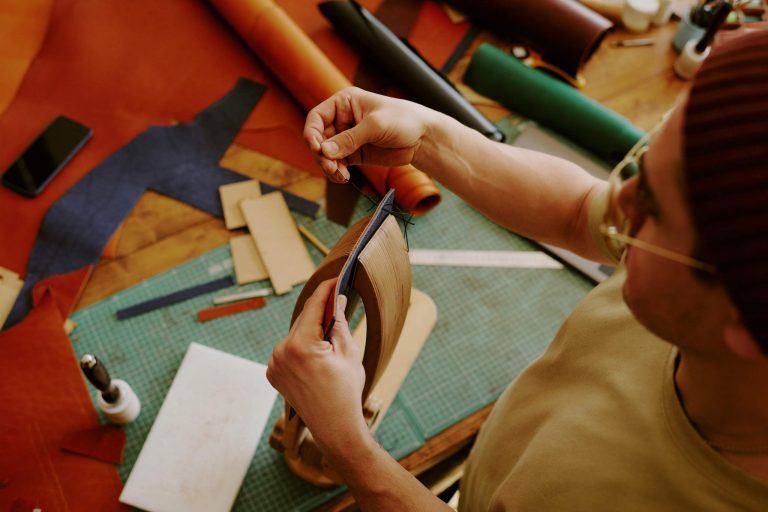
Leather can be used to make beautiful, strong bags, but it’s not as easy to sew as fabric. Some leather is very thick and hard to sew with a regular home sewing machine.
Learn to Make Fabric Bags First
If you’re new to bag making, it’s probably easier to start with fabric and learn how to construct the bag before you try leather.
Don’t Forget the Lining
The outer fabric is only part of the equation.
A lining can enhance the look of the inside of your bag, protect the outer fabric, and give you a finished surface for pockets and other seams. Select a lining that goes well with the main fabric in terms of weight and stiffness.
Don’t Use Too Heavy of a Lining
If the outer fabric is very heavy, using a very heavy lining will make the bag too bulky. Try to find a balance between the two.
Know What Interfacing Is
Interfacing is used to give stiffness to fabric.
Sometimes, you might want to use interfacing with a lighter fabric so it can be used in a more structured bag.
Interfacing Needs Depends On the Bag
Some bags need a little support, and others need a lot. Think about the finished look of the bag before deciding how much interfacing you need.
Take the Fabric’s Pattern Into Account
Some fabrics have patterns or textures that will change depending on which way you orient them. Check to see how your design will look on each piece of the bag before cutting.
Layout Your Pieces Before Cutting
Lay out your pieces and think about how they should be oriented, how to match any patterns, and how much fabric you’ll need. Spending a little time planning before you cut can save you a lot of trouble later.
Make a Test Before You Cut the Final Fabric
If you aren’t sure how the fabric will work, make a small test to see how it cuts, sews, presses, and interacts with the interfacing you’ve chosen.
You might find that the fabric is too thick, too slippery, too stretchy, or just not suitable for your current ability.
Conclusion
The best fabric for a bag isn’t necessarily the most expensive or fancy. It’s the fabric that fits the bag design, your sewing machine, and your skills.
Begin with fabrics you like working with, learn how different fabrics work together, and then try different fabrics. The more you sew, the better you’ll become at making the right fabric choices.